
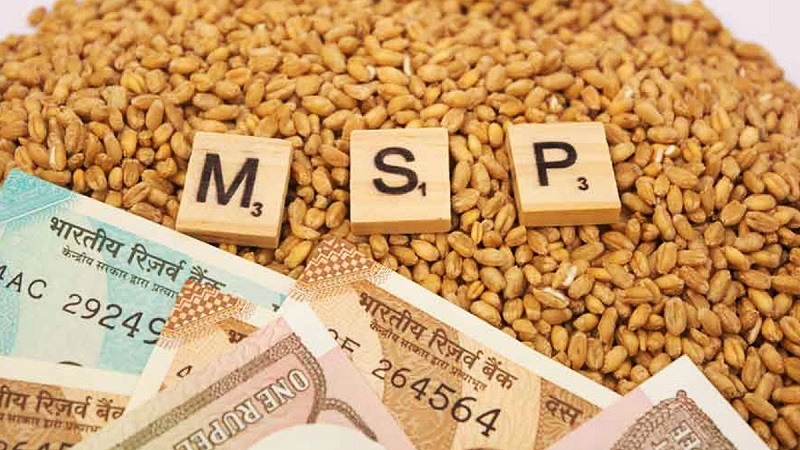
Increased Minimum Support Price (MSP) Boosts Farmer Income and Spurs Seeding for Pulses and Oilseeds
In a positive development for farmers, the mandi prices of kharif crops, particularly oilseeds and pulses, have surged significantly above the benchmark price. This surge is primarily attributed to robust demand and a shortfall in domestic output. The government’s recent announcement of a substantial hike in the minimum support price (MSP) for these crops is expected to further encourage farmers to expand their cultivation of pulses and oilseeds in the upcoming kharif season.
Rising Demand and MSP Hike: The government recently unveiled a notable 10.4% increase in the MSP for moong, setting it at Rs 8,558/quintal for the 2023-23 season. Additionally, tur MSP witnessed a 6% hike compared to the previous year, reaching Rs 7,000/quintal. This move has been welcomed by industry experts who believe that the increased MSP will provide farmers with remunerative prices, leading to higher seeding for pulses like tur, urad, and green mung beans this year.
Supply Shortfall and Domestic Demand: Current market prices for kharif pulses such as tur and moong, as well as oilseeds like groundnut and soybean, have surged above the MSP due to the decline in production last year and robust domestic demand. These factors have contributed to an imbalance between supply and demand, causing market prices to rise sharply.
Encouraging Crop Diversification: The timing of the MSP hike is crucial as it comes at a time when farmers across the country have faced challenges caused by unseasonal rains and changing weather patterns. The increase in MSP is expected to incentivize farmers to diversify their crop choices and opt for certain crops that offer higher profitability.
Reducing Dependency on Imports: India heavily relies on imports, with approximately 56% of its total domestic edible oil requirement and 15% of its pulses consumption being met through imports. However, the procurement of pulses like tur, urad, and moong, as well as oilseeds, by the official procurement agency Nafed, has been minimal in recent years due to mandi prices remaining significantly higher than the MSP. To meet domestic demand, the government has resorted to importing these varieties of pulses.
Inequitable MSP Benefits: While the MSP has proven beneficial for certain crops, it does not equally benefit all agricultural commodities. For instance, only around 45% of produced paddy is procured at MSP, whereas the figures are 25% for cotton and a mere 1-3% for pulses. This highlights the need for greater support and attention to be given to pulses and other crops that are currently underrepresented in the MSP framework.
Addressing Stock Limits and Hoarding: To tackle hoarding and speculation amidst rising prices, the government recently imposed stock limits on tur and urad dal. The stock limit applies to various entities, including wholesalers, retailers, millers, and importers. This decision was made in response to elevated prices for these pulse varieties and aims to maintain stability in the market.
Conclusion: The hike in MSP for kharif crops has had a positive impact on farmer income and is expected to stimulate greater cultivation of pulses and oilseeds. While challenges such as supply shortfalls and rising prices remain, the government’s initiatives to address stock limits and promote crop diversification are steps in the right direction. By continuing to support farmers and ensuring equitable benefits across all agricultural sectors, India can strengthen its domestic production and reduce its dependence on imports.


